
Hydration takeaway The most effective indoor cat hydration tips center on mimicking natural feline instincts: switch to circulating stainless steel fountains, separate water stations from food bowls by at least six feet, introduce high-moisture canned food with warm bone broth toppers, and select wide, shallow ceramic dishes to eliminate whisker fatigue.
Domestic cats descend from the African wildcat (Felis lybica), an arid desert predator adapted to obtain nearly all its daily hydration directly from the moisture of freshly captured prey. Because their ancestral biology evolved around high-moisture prey containing 70 to 75 percent water, modern domestic felines possess a notoriously low thirst drive.
When an indoor cat consumes an exclusively dry kibble diet containing less than 10 percent moisture, their biological thirst response fails to compensate fully for the fluid deficit. Over years of mild chronic dehydration, this subtle fluid shortfall places sustained metabolic strain on the kidneys and lower urinary tract.
Feline lower urinary tract diseases (FLUTD), painful sterile cystitis, and chronic kidney disease rank among the primary health concerns diagnosed in senior house cats. Supporting cellular hydration through daily environmental design represents one of the most impactful preventive health measures a dedicated pet parent can implement.
Transforming your living space into an inviting hydration landscape requires zero medical equipment. By understanding feline sensory preferences regarding water movement, temperature, bowl material, and spatial placement, you can encourage voluntary fluid consumption seamlessly throughout the day.
- Circulating Fountains: Moving streams aerate water, lower surface bacterial growth, and trigger predatory acoustic interest in domestic cats.
- Spatial Separation: Cats instinctively avoid water positioned directly beside their food dishes due to ancestral fear of carcass contamination.
- Whisker Fatigue Prevention: Wide, shallow bowls prevent sensitive facial vibrissae from brushing against container walls during drinking.
- Wet Food Moisture Boosting: Adding warm water or unsalted bone broth to daily meals delivers passive hydration directly into digestive channels.
- Multiple Water Stations: Distribute water sources across multiple quiet household zones to eliminate competition in multi-cat settings.
Why Indoor Cat Hydration Tips Protect Vital Feline Kidneys?
Applying smart indoor cat hydration tips protects vital feline nephrons by maintaining steady urinary dilution and consistent glomerular filtration rates. In desert-adapted felines, concentrated urine allows minerals to crystallize rapidly, precipitating painful urethral blockages and microscopic bladder lesions.
In modern homes, dry extruded kibble contains between 6 and 10 percent water. While dry food offers convenience and stability, studies indicate that cats fed dry kibble drink more absolute water from a bowl than wet-fed cats, yet their total daily fluid intake remains substantially lower than felines eating canned or raw formulas.
This physiological gap produces chronically concentrated urine with an elevated specific gravity. Concentrated urine provides an optimal environment for microscopic mineral crystals to precipitate, forming struvite or calcium oxalate stones that can cause life-threatening urethral obstructions, particularly in male cats.
In addition, adequate blood volume and kidney perfusion depend directly on systemic hydration. By proactively enriching their daily fluid access, you protect nephron function, promote smooth bladder wall health, and maintain optimal digestive regularity.
Veterinary internal medicine specialists emphasize that increasing daily water turnover flushes inflammatory cytokines from the bladder urothelium. This natural flushing mechanism decreases the frequency of sterile idiopathic cystitis episodes in sensitive domestic cats.
How Do Circulating Fountains Increase Daily Feline Drinking?
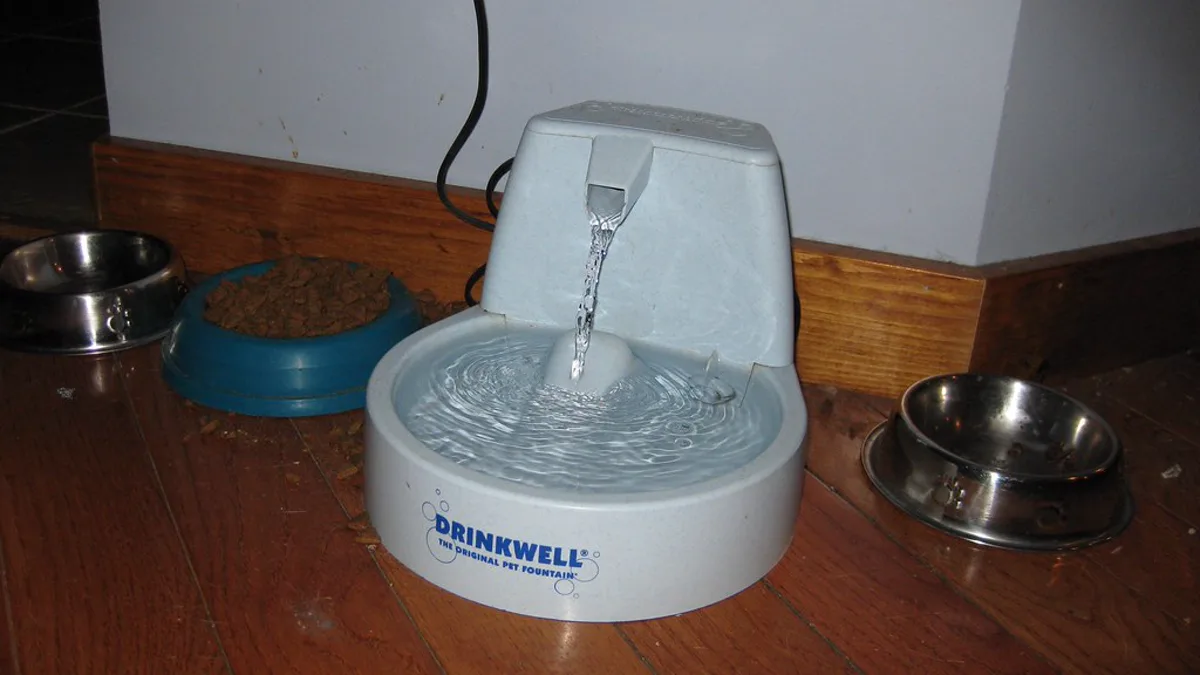
Circulating fountains increase daily feline drinking by appealing to acute predatory senses, as moving water creates auditory cues, ripples that define water depth, and cleaner oxygenated fluid. Felines naturally associate running streams with safety and fresh taste.
Because feline vision is optimized for detecting rapid movement in dim light rather than stationary objects directly beneath their chins, a motionless clear water surface in a bowl is nearly invisible to them. Many cats paw at the water bowl or splash with their pads simply to create ripples before attempting to drink.
Circulating pet fountains equipped with submersible pumps and charcoal filters solve this perceptual challenge. The gentle bubbling sound stimulates feline auditory curiosity, while continuous movement prevents stagnant film from collecting along the surface edges.
When selecting a pet fountain, choose dishwasher-safe ceramic or food-grade 304 stainless steel rather than porous plastic. Plastic surfaces accumulate microscopic scratches over time that harbor bacterial biofilm, which emits chemical odors imperceptible to humans but immediately offensive to a cat’s 200-million olfactory receptors.
| Fountain & Bowl Material | Bacterial Resistance | Whisker Clearance | Cleaning Frequency | Overall Health Score |
|---|---|---|---|---|
| Food-Grade Stainless Steel | Excellent (Non-porous) | High (Wide design) | Weekly dishwasher cycle | 10 / 10 (Top recommendation) |
| Heavy Glazed Ceramic | Very High (Scratch resistant) | High (Shallow basins) | Weekly hand wash | 9 / 10 (Excellent stability) |
| Standard Molded Plastic | Poor (Scratches trap biofilm) | Moderate to Low | Every 2 days required | 4 / 10 (Risk of chin acne) |
| Gravity Storage Jugs | Fair (Stagnant reservoir) | Narrow opening | Bi-weekly deep scrub | 5 / 10 (Lacks active aeration) |
Source: Journal of Feline Medicine and Surgery environmental enrichment standards (reviewed October 2026).
Where Should You Position Water Bowls to Avoid Whisker Stress?
Water bowls should be positioned at least six feet away from food dishes in open, low-traffic areas with clear escape routes. Feline whiskers contain sensitive nerve receptors that experience sensory overload when pressed against narrow bowl sides.
In feline evolutionary memory, water located adjacent to a feeding kill is assumed to be tainted by decomposing visceral contents. When water sits inches from dry kibble, felines frequently bypass the water entirely or drink only under severe physiological distress.
Bowl geometry also plays a decisive role in feline drinking comfort. Feline whiskers (vibrissae) are rich in nerve endings and sensitive mechanoreceptors that register microscopic air currents and spatial boundaries. When forced to drink from deep, narrow cups, the constant tactile pressure against the bowl rim causes sensory overload known as whisker fatigue.
Replace narrow bowls with wide, shallow saucers or flat-bottomed ceramic dishes that allow your cat to lower its tongue without brushing its whiskers against the ceramic sides. Keep water filled to the absolute brim so the animal can drink without tilting its head deeply into an enclosed rim.
How Can You Add Moisture Through Daily Canned Food Meals?
You can add substantial moisture through daily meals by mixing warm water or unsalted bone broth into high-moisture canned wet food. This method delivers hydration passively during feeding without relying on the cat’s natural thirst drive.
Environmental changes to water bowls are valuable, but dietary fluid addition is the most dependable method to guarantee measurable hydration increases. Transitioning your cat to at least one or two daily meals of high-moisture canned wet food provides an immediate surge in physiological fluid intake.
You can amplify canned meals further by stirring in one to two tablespoons of lukewarm filtered water or homemade unseasoned bone broth. Ensure any broth used is free of onions, garlic, shallots, chives, excessive sodium, and culinary spices, which are toxic to feline red blood cells.
The resulting savory gravy coats the meat morsels, encouraging the cat to lap up the warm liquid first before chewing the solids. Warm water enhances the aroma of meat fats and proteins, triggering healthy appetite responses even in picky eaters.
For cats that stubbornly refuse canned food, introduce ice cubes made from diluted tuna juice (packed in water without added salt) or pure chicken stock into their water fountain. The floating, melting ice cube provides both visual play enrichment and gradual flavor release that entices inquisitive licking.
How to Assess Feline Dehydration Using Simple Skin Turgor Tests?
Assessing feline dehydration requires performing a skin turgor test by gently tenting skin over the shoulders, inspecting gum moisture, and observing daily litter box clumping. Healthy skin snaps back instantly, while dehydrated skin flattens slowly.
The simplest non-invasive test is the skin turgor assessment, commonly referred to as the skin pinch test. Gently lift the loose skin over your cat’s shoulder blades into a soft tent, then release it immediately. In a well-hydrated feline, the skin snaps back flush against the body in less than a second.
Next, inspect the oral gums during casual chin scratching. Healthy feline gums are pale pink, slick, and slippery to the touch. If the tissue feels sticky, tacky, or dry against your fingertip, your cat requires immediate fluid encouragement or veterinary evaluation.
Examine daily litter box output as well. An average adult house cat should produce two to three firm, moist stool segments and two to four golf-ball-sized urine clumps every 24 hours. Sudden changes in urine clump volume, frequent trips to the box with minimal output, or crying while posturing warrant immediate emergency veterinary intervention.
- Morning Water Refresh: Rinse ceramic dishes and refill with fresh, cool filtered water to eliminate overnight dust and microbial film.
- Wet Meal Dilution: Stir two tablespoons of warm filtered water into morning canned food to create a rich hydrating broth.
- Fountain Flow Inspection: Check circulating fountain pump intake to clear stray hairs and verify silent, smooth bubbling action.
- Multi-Station Placement: Maintain at least three distinct drinking zones distributed across bedroom, hallway, and living spaces.
- Evening Clump Audit: Scoop litter boxes nightly to verify consistent urine clump sizes and monitor kidney excretion health.
Frequently Asked Questions
How much water should an indoor cat drink every day?
An average healthy adult cat weighing 10 pounds requires approximately 3.5 to 4.5 ounces (100 to 130 ml) of total water daily. Cats eating canned food receive roughly 70 percent of this quota directly from meals, whereas cats eating dry kibble must drink almost all of it from bowls.
Why does my cat dip its paw in the water bowl before drinking?
Cats dip their paws into water bowls to test the depth of the water surface, verify water stability, or create gentle ripples to make the clear fluid visible. It can also indicate whisker fatigue caused by a bowl that is too narrow.
Are ceramic fountains better than plastic fountains for cats?
Yes, ceramic and stainless steel fountains are significantly superior to plastic models. Plastic scratches easily, harboring bacteria that cause feline chin acne and off-putting odors that deter drinking.
Can I give my cat milk instead of water for hydration?
No. Most adult cats are lactose intolerant and lack sufficient lactase enzymes to digest bovine milk. Offering cow milk leads to intestinal cramping, vomiting, and diarrhea, which accelerates dehydration.
How often should I change my indoor cat’s water dish?
Refresh standing water bowls daily with cool, filtered tap or spring water, washing the dish thoroughly with unscented soap. Clean electric fountains and replace internal charcoal filters every two to four weeks.
How we researched this: Feline hydration guidelines are based on veterinary nephrology recommendations, indoor enrichment studies, and feline fluid intake research. An AI tool drafted the initial structure, and the feline specialist verified every biological and behavioral recommendation.