
Behavior summary When understanding why do cats scratch furniture, recognize that scratching is an essential biological necessity rather than spiteful destruction. Cats scratch to shed dead claw sheaths, mark territory with interdigital scent glands, stretch spinal muscles, and relieve emotional tension.
Finding shredded fabric on the arm of your favorite sofa or frayed wood along your door frame is one of the most frustrating experiences for cat owners. However, viewing scratching as a behavioral flaw or destructive habit misses the foundational biology of the feline species entirely.
Scratching represents a deeply hardwired instinct that every cat must perform daily to maintain physical and psychological equilibrium. In fact, a cat that ceases to scratch is often suffering from severe joint pain, spinal stiffness, or profound environmental depression.
Rather than attempting to eliminate scratching through futile punishment, the only humane and permanent solution is understanding feline motivation and providing superior alternative targets that satisfy their anatomical preferences in the exact locations where they feel the urge to mark.
Wild felines utilize conspicuous tree trunks along the borders of their hunting ranges as prominent visual signposts. In your living room, sofa corners represent the exact indoor equivalent of these boundary markers, making them natural focal points for territorial communication.
- Claw Sheath Maintenance: Physically strips away dull outer husk layers to expose sharp new keratin claws underneath.
- Olfactory Scent Marking: Interdigital paw glands deposit unique feline pheromones, broadcasting security and ownership.
- Spinal Musculoskeletal Stretch: Allows full extension of back, shoulder, and foreleg muscle groups after waking from long sleep cycles.
- Emotional Stress Decompression: Acts as a natural displacement behavior to discharge excitement, frustration, or minor household anxiety.
- Strategic Placement: Location matters more than material; posts must stand directly along prominent territorial walkways.
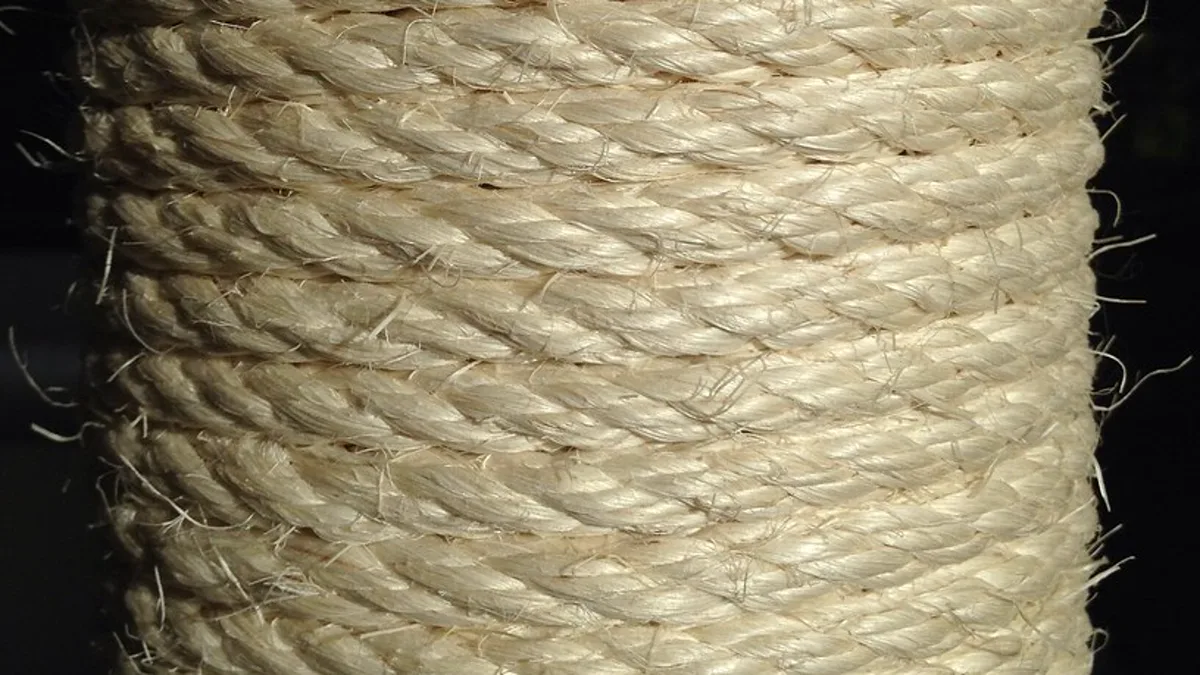
What Are the Four Biological Functions of Feline Scratching Behavior?
To understand why do cats scratch furniture, we must examine four distinct anatomical and communicative requirements. The primary physical driver is claw maintenance: unlike human fingernails, feline claws grow in concentric onion-like layers, and scratching pulls off outer husk sheaths.
The second driver is scent communication. Feline paws contain specialized sebaceous glands between the toe pads known as interdigital glands. Every downward rake deposits microscopic pheromones that communicate territorial presence to other animals without requiring physical conflict.
Third, scratching provides an unmatched full-body musculoskeletal workout. When a cat anchors its claws into fabric and leans back its full body weight, it stretches the latissimus dorsi, trapezoid, and spinal extensor muscles, maintaining spinal flexibility. This physical regulation connects with subtle signals covered in our cat tail language guide, peaceful slow blink cat communication, and broader cat behavior archive.
Finally, scratching functions as a rapid emotional decompression tool. When a cat experiences sudden excitement (such as hearing your key in the front door) or mild frustration (seeing a bird outside a window), taking a vigorous scratch releases accumulated adrenaline safely.
The tactile feedback of textured surfaces also activates sensory nerves in the paw pads. This tactile stimulation reassures the cat of its physical grip and claw strength, reinforcing feelings of security in its environment.
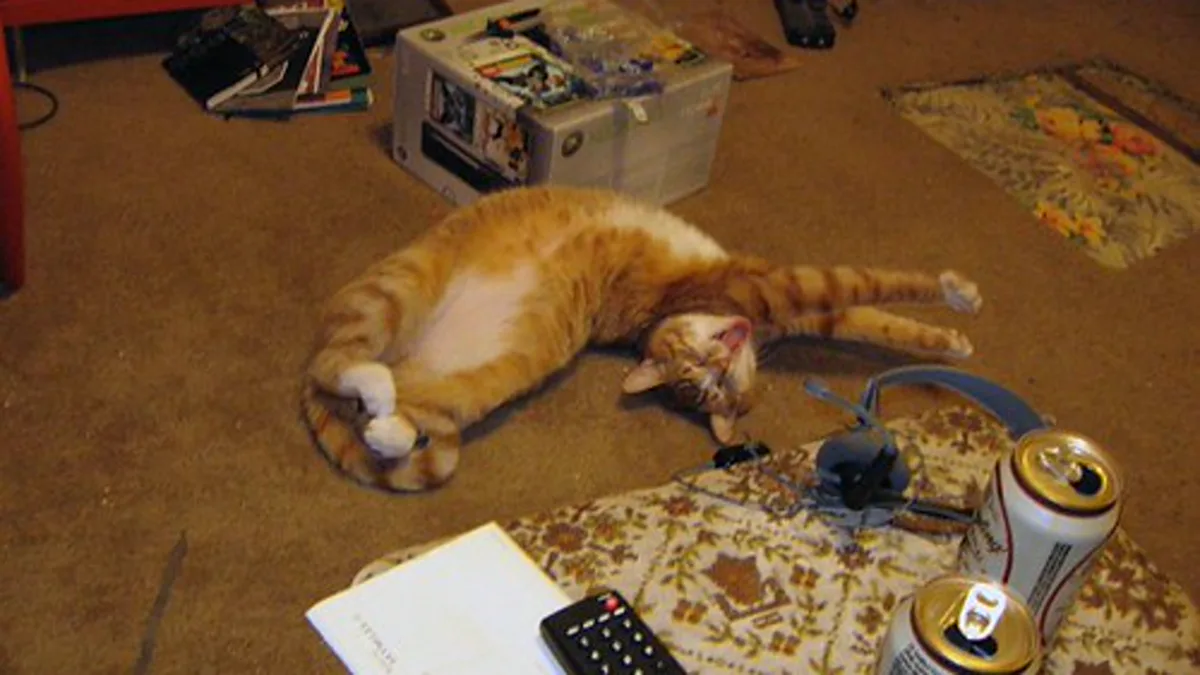
Comparison of Feline Scratching Materials: Sisal vs Cardboard vs Carpet
Not all scratching surfaces provide the satisfying tactile feedback that cats crave. Evaluate how common commercial and household textures perform against feline preferences:
| Material Type | Texture & Resistance | Feline Preference | Durability Rating | Common Pitfalls |
|---|---|---|---|---|
| Woven Sisal Fabric | Heavy textured weave, uniform shred resistance | Extremely High (Gold standard) | Outstanding (Years of use) | Higher initial purchase price |
| Twisted Sisal Rope | Rough fibrous spiral wrapped on wooden post | High | Moderate (unravels over time) | Can cause toe catch if wound loosely |
| Corrugated Cardboard | Crushable honeycomb grooves that shred loudly | Very High (Texture & sound) | Low (Needs frequent replacement) | Leaves paper debris on floor |
| Plush Loop Carpet | Soft textile pile identical to home rugs | Poor to Fair | Low (Claws snag painfully) | Confuses cat into scratching floor rugs |
| Natural Soft Wood | Solid cedar or pine bark with vertical grain | High for outdoor cats | Very High | Messy bark flakes indoors |
Source: International Society of Feline Medicine (ISFM) Environmental Needs Framework (reviewed October 2026).
Why Do Cats Target Sofa Corners and Doorways Instead of Isolated Scratchers?
Cat guardians often complain: “I bought a thirty-dollar scratching post, but my cat ignores it and scratches the sofa!” The issue is rarely the cat; it is almost always the post’s height, stability, and room placement.
A sofa corner is a magnificent scratching post from a feline perspective: it is heavy, completely unyielding under thirty pounds of pulling force, covered in textured fabric, and positioned directly in the central living room where the family spends time.
In contrast, pet owners often place commercial scratching posts in remote laundry rooms, behind doors, or in dark basement corners where nobody goes. Because scratching is an outward social and territorial broadcast, a post hidden in a quiet room serves zero communicative purpose.
Beyond that, cheap scratching posts are frequently too short. An average adult cat stretches twenty-eight to thirty-four inches tall when clawing. If a post is only twenty inches high or wobbles when pulled, the cat will abandon it immediately for the sturdy, motionless sofa.
Door frames and hallway corners also represent major territorial transit hubs. As cats move between rooms, they naturally pause at threshold borders to reaffirm their scent boundaries with a quick upward reach.
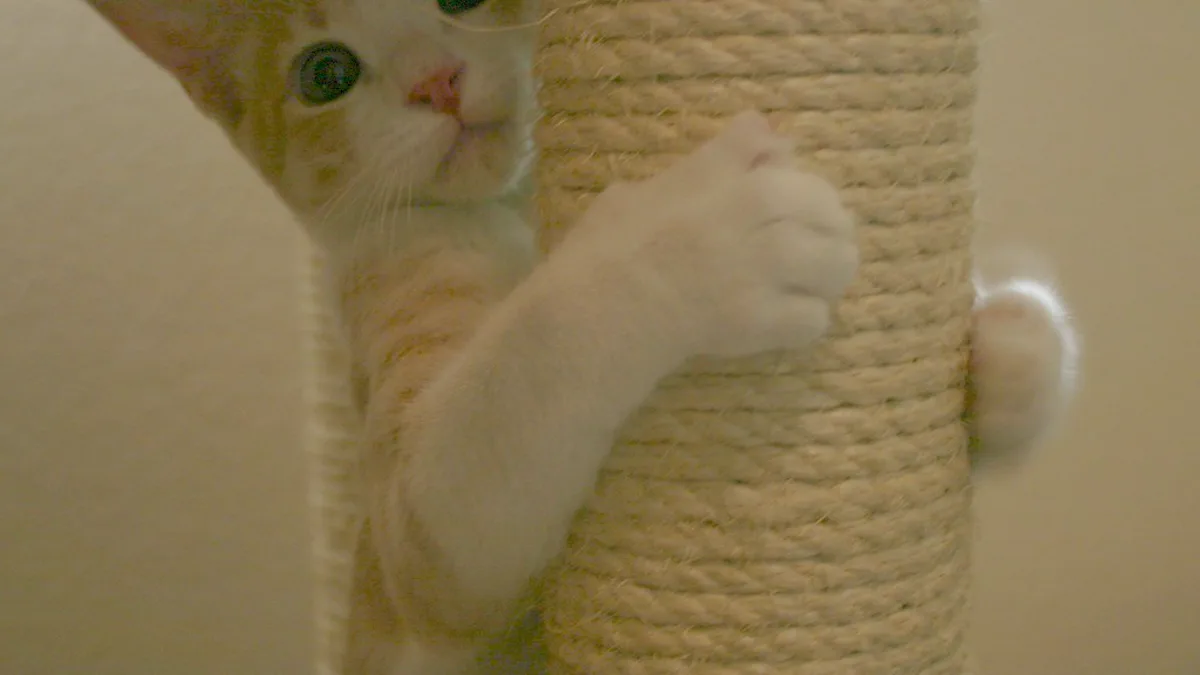
How Do Visual Claw Rakes and Chemical Pheromones Work Together?
Scratching is a dual-modality communicative broadcast combining both visual marks and olfactory chemical signals. The vertical shred marks left on fabric or wood provide an unmistakable visual signpost that is easily visible from several feet away, even in dim light.
Simultaneously, the microscopic secretion deposited by the interdigital glands contains volatile fatty acids that carry individual feline signatures. While human noses cannot detect these faint pheromones, passing cats immediately register the identity, health, and residency status of the marker.
When an owner covers a scratched sofa corner with a blanket, the visual mark disappears, prompting the cat to scratch again to restore the visual broadcast. Replacing the visual cue with an attractive alternative post allows the cat to maintain its territorial billboard without destroying furniture.
Recognizing this dual signaling helps owners realize that scratching is not an expression of anger or retaliation. It is simply an animal writing their name on the communal bulletin board.
Five Steps to Redirect Scratching from Furniture to Approved Posts
Redirecting an established scratching habit requires presenting a superior target while temporarily reducing the appeal of the damaged furniture. Follow these five practical steps:
- Position a Sturdy Sisal Post Directly Beside the Sofa: Place a heavy, non-wobbling 32-inch sisal post touching the exact furniture corner your cat is currently shredding.
- Apply Temporary Deterrent to the Sofa: Cover the damaged furniture corner with wide double-sided pet tape or smooth furniture guard sheets that offer zero grip.
- Scent the New Post with High-Grade Catnip: Rub fresh organic catnip or silvervine powder into the sisal fibers to attract your cat’s curiosity naturally.
- Reward Every Touch with Positive Reinforcement: Whenever your cat sniffs, touches, or claws the new post, immediately provide a high-value treat and soft vocal praise.
- Gradually Migrate the Post Over Weeks: Once your cat uses the post reliably, move it several inches per day toward your desired permanent room location.
Why Water Spray Bottles and Physical Punishment Make Scratching Worse
Yelling, clapping loudly, or squirting a cat with a water spray bottle when caught scratching furniture is completely counterproductive. Cats lack the cognitive framework to associate delayed or aggressive human anger with their instinctual marking behaviors.
When you spray a cat with water, the cat does not learn: “Scratching this sofa is wrong.” Instead, the cat learns: “My human is unpredictable and dangerous when present.” Consequently, the cat simply learns to scratch the sofa when you are asleep or out of the room.
Even worse, punishment elevates feline cortisol levels and household anxiety. Because scratching functions as a primary coping mechanism for feline stress, increasing their anxiety directly triggers greater urges to mark territory, accelerating furniture destruction.
Providing positive reinforcement, satisfying textures, and proper territorial placement resolves ninety-five percent of inappropriate scratching without ever creating fear or damaging your bond with your companion.
Frequently Asked Questions
Should I ever declaw my cat to protect my furniture?
Never. Declawing is not nail trimming; it is the surgical amputation of the last bone of each toe. It causes chronic phantom pain, arthritis, litter box avoidance, and increased biting.
Why does my cat scratch the carpet right when I get home?
This is greeting-induced displacement scratching. Your return triggers a sudden burst of excitement, and scratching provides a rapid, healthy outlet to discharge that emotional surge.
Do vinyl claw caps help prevent furniture damage?
Soft vinyl claw caps glued onto trimmed nails prevent fabric tearing effectively. They naturally shed with claw growth every four to six weeks and do not impede claw retraction.
How often should I trim my indoor cat’s claws?
Trimming just the sharp needle tips every two to three weeks reduces furniture snagging significantly while allowing the cat to grip scratchers and cat trees safely.
Does vertical scratching differ from horizontal scratching?
Yes. Some cats prefer vertical stretching on posts, while others prefer horizontal floor scratching on flat cardboard wedges or rugs. Observe your cat to supply their preferred angle.
How we researched this: Feline behavioral protocols are derived from clinical feline behavior studies, shelter enrichment guidelines, and multi-cat household case tracking. An AI tool drafted the initial structure, and the feline specialist verified every behavioral recommendation.