
Whisker summary Effective cat enrichment ideas satisfy natural feline predatory sequences through structured daily play, vertical territory expansion, and forage feeding. Providing active wand play that ends in a small protein meal, installing elevated perches at window level, and rotating tactile puzzle feeders prevents behavioral boredom and stress-induced house soiling without requiring complex home remodeling.
Living indoors protects domestic felines from external trauma, road traffic, and contagious disease, yet an unstimulating indoor environment frequently generates chronic behavioral frustration. A bored cat rarely rests peacefully; instead, unspent predatory energy manifests as midnight vocalization, destructive scratching on furniture, or sudden ambushes directed at human ankles. Implementing purposeful environmental enrichment bridges the gap between indoor security and biological instinct.
Feline welfare organizations, including the American Association of Feline Practitioners (AAFP) and International Cat Care, emphasize that enrichment is not a luxury or a collection of plastic novelties. True enrichment represents essential psychological care. By addressing sensory exploration, predatory play, spatial navigation, and food acquisition, handlers create a calm, predictable territory where cats thrive mentally and physically.
- Predatory Completion: Interactive play must follow the natural feline sequence of stalk, chase, pounce, catch, and eat.
- Vertical Territory: Cats perceive their territory in three dimensions; elevated perches multiply usable living space in small homes.
- Forage Feeding: Replacing stationary gravity food bowls with puzzle feeders stimulates problem-solving and slows rapid eating.
- Olfactory Stimulation: Introducing safe botanical scents like silver vine and cat grass engages dormant scent-mapping behaviors.
- Safe Rotation: Rotating a small collection of toys weekly maintains novelty and prevents sensory habituation.
What Cat Enrichment Ideas Aid Daily Feline Health?
Essential cat enrichment ideas encompass five biological domains: predatory play simulation, vertical territory expansion, olfactory exploration, cognitive foraging, and safe outdoor visual access. Balancing these five pillars addresses the full ethological spectrum of domestic felines, reducing stress-related urinary issues and territorial friction in indoor environments.
Domestic cats descend from solitary desert hunters who spent significant daytime hours patrolling territories and pursuing small rodents. Confining a predator to a four-walled room without sensory tasks produces cognitive atrophy. Handlers who introduce varied textures, scents, and problem-solving games observe immediate reductions in anxiety and stress-associated overgrooming.
A balanced enrichment routine requires neither costly electronic gadgets nor extensive room modifications. Simple alterations, such as clearing the top of a sturdy bookshelf, introducing fresh cardboard boxes with varied access holes, and concealing kibble portions across multiple rooms, activate searching behaviors naturally. Consistency and predictability matter more than gadget variety.
How Does the Natural Predatory Play Sequence Work?
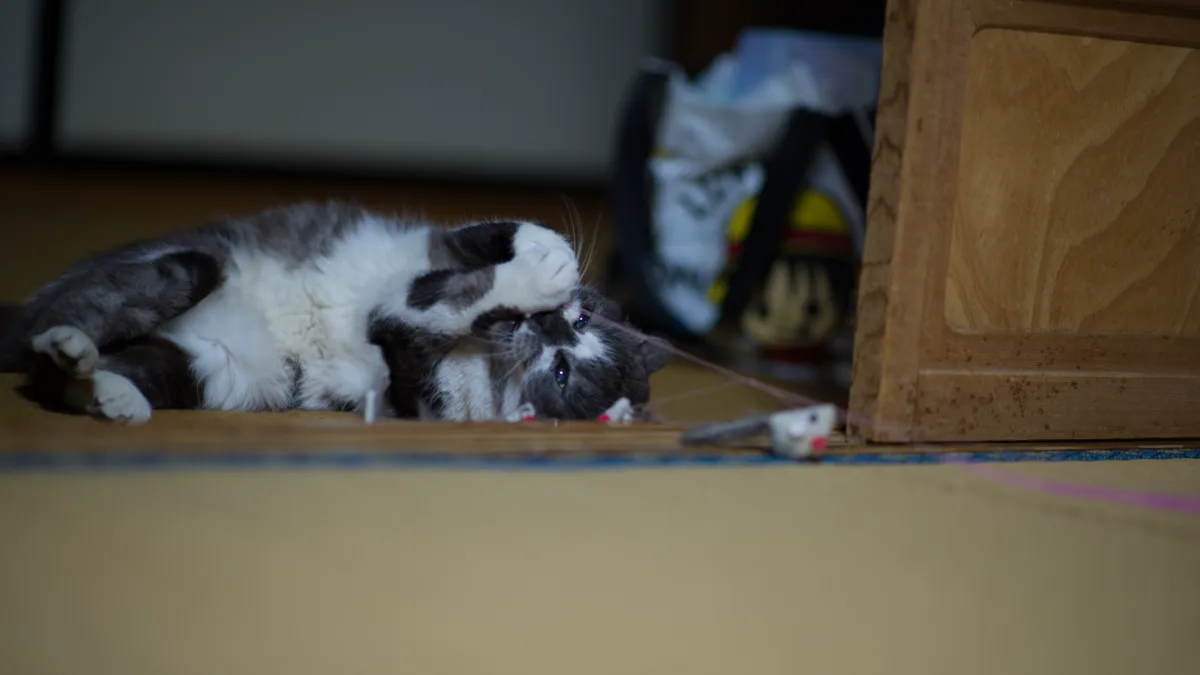
The natural predatory play sequence consists of five sequential behavioral phases: stalk, chase, pounce, catch, and eat. Simulating this exact chain using a flexible wand toy allows an indoor cat to exhaust its instinctive hunting drive. Finishing the play session with a high-protein treat or scheduled meal signals biological closure, enabling the cat to enter a relaxed, restorative grooming and sleeping cycle.
Many handlers make the mistake of waving a feather wand erratically in the cat’s face. In the wild, prey animals never run directly toward a predator. Move the toy like a small rodent or injured bird: creeping slowly around furniture corners, pausing behind cardboard boxes, and darting away across open carpet. Allow the cat time to fixate, crouch low, and twitch its tail as it plans the ambush. The stalking phase burns immense cognitive energy.
Handlers must ensure the cat catches and physically holds the toy periodically throughout the session. Laser pointers frequently generate behavioral frustration because the animal cannot experience the tactile satisfaction of grasping its quarry. If you utilize a laser pointer, always transition to a physical plush kicker or wand lure at the conclusion so the animal completes the capture. A brief meal immediately following play satisfies the biological expectation that a successful hunt yields food.
Schedule two dedicated interactive play sessions each day, ideally ten to fifteen minutes in length. Because felines are crepuscular hunters naturally active at dawn and dusk, holding an energetic play session just before human bedtime helps curtail midnight activity and promotes uninterrupted sleep for the entire household on play and enrichment.
Why Do Cats Need Vertical Territory Indoors?
Vertical space expands an indoor cat’s usable territory by utilizing walls, window perches, and sturdy climbing trees rather than floor area alone. Elevated vantage points provide sensory security, allowing cats to survey their home environment without fear of ambush from other pets, vacuum cleaners, or household foot traffic.
Cats naturally assess their safety from above. In multi-cat households, high perches prevent social friction by establishing clear vertical hierarchy zones without physical conflict. A cat perched on the top tier of an eight-foot climbing tree signals confidence and ownership, while a more timid cat can navigate across staggered wall shelves to reach resting spots without crossing paths on the floor.
When selecting vertical structures, stability is paramount. A wobbly tree that rocks when an adult twelve-pound cat leaps onto it will be quickly abandoned. Mount wall-mounted steps securely into wall studs and place floor-standing trees near exterior windows. Window perches act as “cat television,” providing dynamic visual enrichment as outdoor birds, squirrels, and falling leaves stimulate visual tracking instincts for hours.
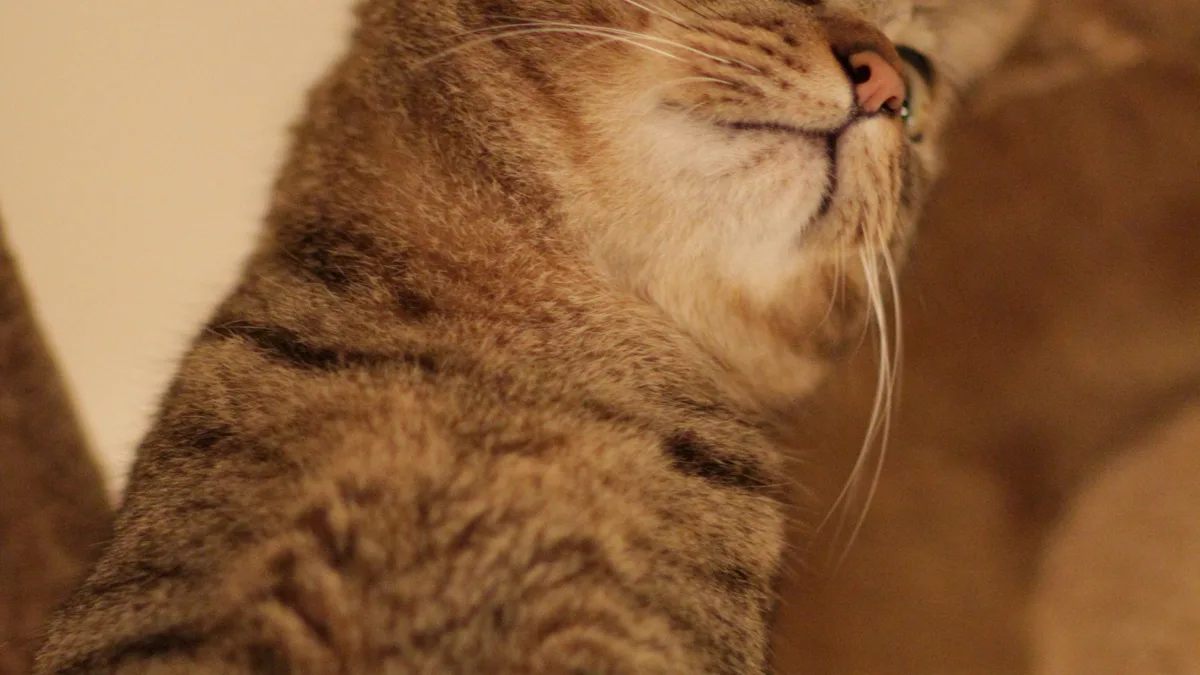
Ensure that vertical runways offer multiple exit points. Dead-end perches can trap a submissive cat if a more assertive companion blocks the solitary descent path. Creating a continuous loop (such as moving from a scratching post to a wall shelf, across a bookcase, and down via an armchair) ensures smooth, stress-free transit across room boundaries.
How Do Food Puzzles and Foraging Ease Feline Boredom?
Food puzzles and foraging activities engage a cat’s innate hunting intelligence by requiring physical manipulation and cognitive effort to extract daily meals. Presenting dry kibble or wet food exclusively in free-access open dishes encourages sedentary overeating, rapid gorging, and boredom-induced lethargy.
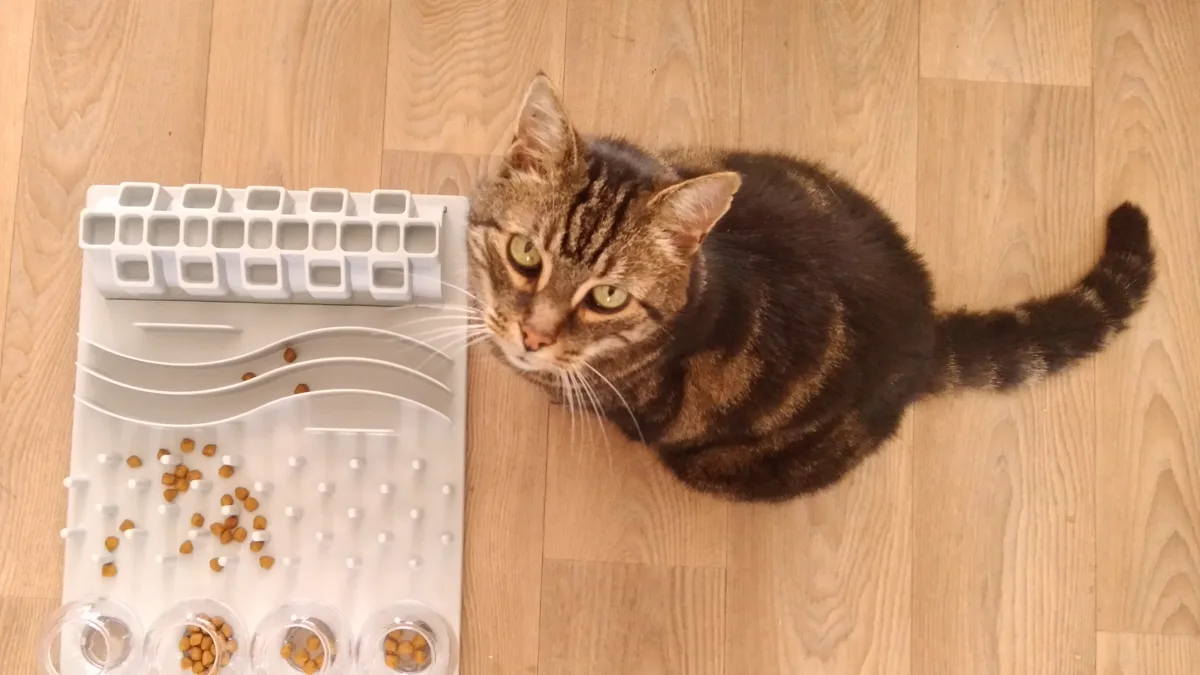
In natural settings, wild felines spend up to six hours daily hunting small prey, consuming eight to twelve tiny meals spread across twenty-four hours. Transitioning an indoor cat to puzzle feeders restores this natural foraging cadence. Start with beginner-friendly rolling balls featuring large apertures or stationary plastic maze boards where kibble can be easily nudged loose with a single paw swipe.
As the cat demonstrates proficiency, introduce moderate challenges such as sliding-tile boards, silicone lick mats for wet food, or cardboard egg cartons containing concealed treats. You can craft simple homemade foraging devices using clean paper towel tubes with holes punched along the sides, folding the ends inward to create an engaging rolling dispenser.
Scatter multiple foraging stations throughout the home rather than clustering them around the water bowl. Hiding a tablespoon of kibble atop a cat tree, behind a living room armchair, and inside an open closet encourages regular exploratory patrols. If an animal appears hesitant, temporarily increase treat palatability by adding freeze-dried poultry morsels until the problem-solving habit takes root.
Which Scent and Tactile Experiences Enrich Indoor Cats?
Scent and tactile experiences enrich indoor cats by stimulating the olfactory system and vomeronasal organ, introducing novel biological information into an otherwise static home. Safe olfactory enrichment includes catnip (Nepeta cataria), silver vine (Actinidia polygama), valerian root, fresh cat grass, and novel textured cardboard scratchers.
Approximately thirty percent of domestic cats carry a genetic non-responsiveness to the nepetalactone compound found in traditional catnip. Silver vine contains multiple active lactones, including actinidine, often evoking playful rolls, chin rubbing, and purring in cats indifferent to catnip. Offer powdered silver vine or compressed wood chew sticks once or twice weekly to prevent olfactory habituation.
Fresh pots of indoor cat grass (typically sprouted wheat, oat, or barley seeds) provide fibrous tactile stimulation and harmless plant browsing opportunities. Ensure all household greenery is non-toxic; keep true lilies, pothos, and philodendrons entirely out of cat-inhabited homes, as accidental ingestion presents acute health emergencies requiring immediate veterinary intervention.
Cardboard delivery boxes remain one of the most effective, low-cost tactile enrichment tools available. Felines favor enclosed boxes because rigid sides provide physical containment, conserving body warmth while fulfilling natural ambush concealment drives. Cutting two paw-sized peepholes into an inverted cardboard box turns everyday household packaging into an engaging, multi-sensory hunting bunker.
| Enrichment Type | Target Behavioral Drive | Recommended Frequency | Practical Implementation |
|---|---|---|---|
| Interactive Wand Play | Predatory sequence (stalk, chase, pounce) | 2 sessions daily (10 to 15 min) | Feather or fur lure on string, dragged away behind furniture; end with a treat. |
| Vertical Territory | Spatial security and environmental survey | Permanent access | Sturdy climbing tree or wall-mounted perches positioned near sunlit windows. |
| Food Puzzles & Foraging | Cognitive problem-solving and portion pacing | Daily at meal times | Rolling dispenser balls, maze boards, or scattered puzzle boxes across rooms. |
| Olfactory Stimulation | Scent mapping and vomeronasal activation | 2 to 3 times weekly | Rotated silver vine sticks, dried valerian, fresh cat grass, and cardboard boxes. |
| Tactile Scratching Zones | Claw shedding and territorial pheromone marking | Permanent access | Vertical sisal posts tall enough for full-body stretch placed near entryways. |
Source: American Association of Feline Practitioners (AAFP) and International Cat Care Environmental Enrichment Guidelines (checked October 2026).
Five Steps to Structure a Daily Enrichment Routine
Structuring a sustainable daily routine ensures consistent cognitive exercise without overwhelming human caretakers. Following a step-by-step framework establishes predictability, reducing feline anxiety associated with erratic schedules.
- Morning Foraging Setup: Divide the morning dry food ration into two puzzle feeders or hide small portions on elevated perches before departing for work.
- Midday Window Access: Open window blinds facing garden greenery or bird feeders to provide active visual stimulation during quiet daylight hours.
- Evening Wand Session: Dedicate fifteen minutes before human dinner to vigorous predatory wand play, moving the lure along furniture perimeters.
- Post-Play Protein Meal: Serve the evening wet food portion immediately following the wand play catch to complete the biological hunt-and-eat sequence.
- Nighttime Toy Rotation: Gather loose floor toys into a closed storage basket and rotate two fresh tactile kickers or scent-infused items for the following day.
Scratching posts must match the full stretched length of the cat’s body. A standard adult domestic cat measures between twenty-four and thirty inches when standing on its hind legs to stretch its spine and shoulder blades. If a scratching post stands only eighteen inches tall, the animal cannot achieve full mechanical traction and will inevitably seek out the sturdy arm of a sofa instead. Anchor scratching posts firmly near sleeping quarters and main room thresholds where territorial marking drives are highest.
Questions Before Rearranging
How many minutes of enrichment does an indoor cat need each day?
Adult indoor cats thrive with twenty to thirty minutes of structured interactive play daily, ideally divided into two fifteen-minute intervals. Complement this hands-on play with passive enrichment, such as accessible window views, sturdy scratching posts, and foraging food puzzles distributed throughout the living area.
Does Cat TV on television screens count as healthy enrichment?
Visual media displaying birds or rodents provides engaging visual tracking, but it lacks physical tactile culmination. To prevent frustration from chasing unreachable digital screens, limit video sessions to twenty minutes and follow immediately with a tangible wand toy the cat can physically grasp and bite.
Why does my cat ignore expensive enrichment toys?
Cats frequently ignore commercial toys left permanently on the floor because motionless objects do not stimulate the hunting drive. Introduce motion yourself with wand lures, place toys inside crinkly paper bags, or sprinkle a pinch of fresh silver vine to rekindle exploratory interest.
Can laser pointers cause behavioral issues in cats?
Excessive laser pointer play without a physical payoff can produce obsessive searching and agitation, as the predatory sequence cannot be completed. If using a laser pointer, always guide the red beam onto a physical plush toy or treat at the end so the animal experiences tangible success.
When should sudden changes in play habits prompt a veterinary visit?
Any sudden refusal to jump, reluctance to chase favorite toys, vocalizing while moving, or withdrawal into secluded corners warrants prompt examination by a licensed veterinarian. Felines instinctively mask physical discomfort, and sudden lethargy or behavioral changes frequently indicate underlying medical conditions rather than simple boredom.
How we researched this: Behavior notes follow published guidance from veterinary and animal-welfare organizations; health questions are referred to a veterinarian. An AI tool drafted the first version and the writer revised it.