
Claw trimming summary Learning how to trim cat claws safely requires gentle paw desensitization, dedicated feline scissor clippers, and strict respect for claw anatomy. Extend the claw by pressing gently above and below the toe pad, trim only the sharp transparent hook two millimeters ahead of the pink vascular quick, and reward cooperation with high-value lickable treats.
For many pet owners, clipping their feline companion’s nails feels like entering a high-stakes wrestling match fraught with squirming limbs, flashing teeth, and mutual distress. Yet regular nail maintenance is an essential pillar of indoor feline healthcare, preventing ingrown paw pad punctures and protecting household furnishings.
Indoor cats naturally maintain their claws through scratching scratching posts, but scratching only sheds the dead outer sheath (husk) to reveal a razor-sharp new claw underneath. Without periodic trimming, claws grow long, curved, and prone to snagging on carpets or penetrating soft digital pads, especially in senior felines.
Fortunately, feline nail trimming does not require brute physical restraint or traumatic scruffing. By adopting modern Fear Free handling protocols, desensitizing your pet through gradual touch conditioning, and pairing the procedure with irresistible rewards, nail trims can become calm, peaceful routines.
Whether you are trimming the tiny needle-like tips of a spirited kitten or managing the thickened claws of a dignified senior cat, mastering foundational mechanics ensures safe, painless grooming every single time.
- Claw Anatomy Mastery: The pink central quick contains nerve endings and capillaries; trim strictly the clear transparent curve ahead of it.
- Gradual Touch Conditioning: Desensitize paw handling over several days during relaxed cuddle sessions before introducing actual cutting tools.
- Dedicated Scissor Clippers: Sharp feline-specific scissor clippers cut cleanly without crushing the delicate keratin matrix of the claw.
- Single Claw Increments: Never force a full four-paw session at once; clipping one or two claws calmly per day builds positive lifelong tolerance.
- Emergency Styptic Preparation: Always keep styptic powder or cornstarch within reach to arrest bleeding instantly in case of an accidental nip.
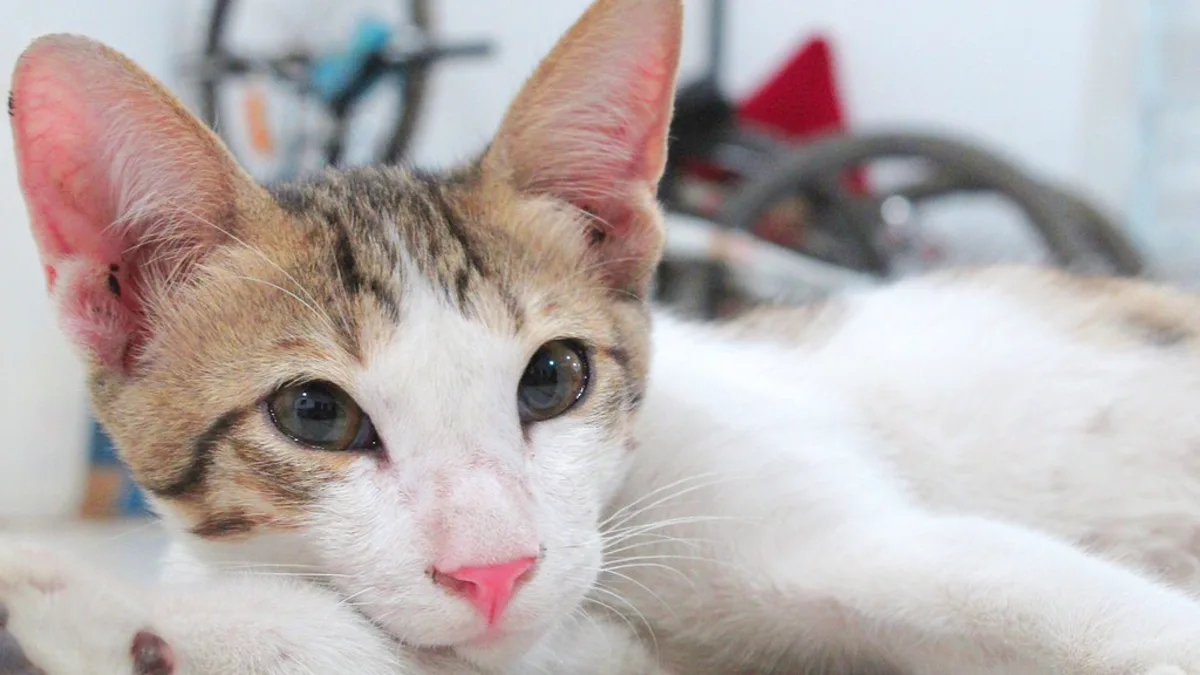
How to Trim Cat Claws Safely Without Pain or Bleeding?
Executing how to trim cat claws safely without pain or bleeding depends entirely on visual identification of the pink vascular quick inside the transparent claw shell. By clipping only the sharp hook two millimeters ahead of the bloodline, you protect sensory nerve fibers completely.
Unlike dog nails which are often opaque black, most domestic feline claws are beautifully translucent, making internal structures visible under good lighting. At the center of each claw lies the quick, a delicate triangular pink structure packed with microscopic blood capillaries and sensitive sensory nerve endings.
Cutting into the quick causes immediate sharp pain and brisk bleeding, creating a traumatic memory that will cause your cat to resist future grooming attempts fiercely. Surrounding the quick is the hard outer keratin shell that terminates in a curved, needle-sharp translucent hook.
Your sole objective during a nail trim is removing this two-to-three millimeter transparent curved tip. Feline claws are retractable, housed within protective leather sheaths between the toe beans.
To expose the claw cleanly, place your thumb on top of the toe above the claw and your index finger underneath the corresponding toe pad, applying gentle, steady pressure until the claw glides smoothly forward.
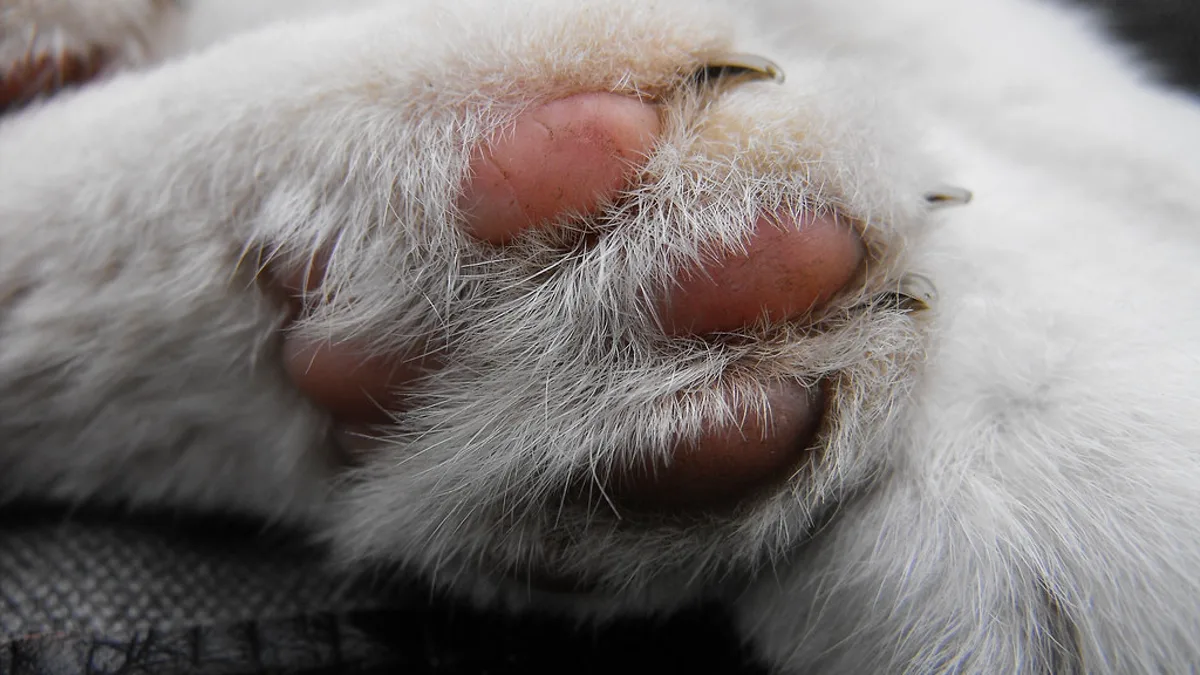
What Anatomical Structures Must You Identify Before Cutting?
You must identify the transparent keratin outer hook, the pink vascular quick, and the digital flexor mechanism before cutting. Understanding how these biological structures align prevents accidental capillary damage during grooming.
Feline paws contain five digits on each front paw (including the medial dewclaw) and four digits on each rear paw. The digital flexor tendons keep claws retracted during normal walking to protect sharpness and enable silent stalking.
When examining the extended claw under direct lighting, you will notice a distinct pink triangle extending from the base of the nail towards the midpoint. This vascular core supplies blood to the germinal matrix producing new nail growth.
The clear, glass-like tip beyond the pink triangle consists of dead keratinized protein identical to human hair. This zone feels zero physical sensation when severed with sharp clipper blades.
| Clipper Style | Cutting Action | Best Cat Life Stage | Keratin Crushing Risk | Recommendation |
|---|---|---|---|---|
| Pet Scissor Clippers | Curved dual shearing blades | All ages (Kittens to seniors) | Minimal (Clean slice) | 10 / 10 (Gold standard) |
| Guillotine Style Clippers | Single blade through loop | Adult cats only | Moderate (Can pinch quick) | 6 / 10 (Requires careful sight) |
| Human Nail Clippers | Horizontal compression | Emergency backup only | High (Splits curved nail) | 5 / 10 (Not recommended) |
| Electric Rotary Grinders | Abrasive rotating drum | Nervous cats (Desensitized) | Low (Generates heat/vibration) | 7 / 10 (Loud motor sound) |
Source: American Association of Feline Practitioners (AAFP) Grooming Guidelines (reviewed October 2026).
How Do You Desensitize Sensitive Paws to Gentle Handling?
Desensitizing sensitive paws requires gradual touch conditioning over several days, pairing gentle toe touching with high-value lickable treats. Never attempt cutting claws on an anxious cat that has not learned paw acceptance.
Felines are instinctively protective of their paws because their digital pads are loaded with tactile sensory receptors and represent their primary defensive apparatus. Attempting to restrain an unprepared cat and grab its paws will trigger immediate panic.
Begin paw desensitization days before introducing nail clippers. During quiet evening cuddles when your cat is drowsy, gently stroke the upper legs, working slowly down to the paws. Touch a single toe pad for one second, release it, and immediately offer a delicious treat like Churu or cooked chicken breast.
Over multiple sessions, advance to gently pressing the toe pads to extend the claws, always pairing the sensation with praise and food rewards. Once your cat remains relaxed during paw manipulation, introduce the clippers into the environment.
Let your cat sniff the clippers while resting on the floor beside a pile of treats. Practice cutting dry spaghetti noodles near your cat’s ears so they grow accustomed to the crisp clicking sound that clippers make without associating it with discomfort.
Why Do Dewclaws and Senior Nails Require Frequent Maintenance?
Dewclaws and senior nails require frequent maintenance because they do not wear down against floors or scratching posts, causing them to curl in circular spirals that pierce paw pads. Senior arthritis also reduces natural claw husk shedding.
Never forget the dewclaws located on the inner side of your cat’s front wrists. Because dewclaws do not touch the ground and rarely make contact with scratching posts, they do not shed their outer husks naturally.
Without regular trimming, dewclaws continue growing in an unbroken circular spiral, eventually curling backward and piercing deeply into the carpal paw pad. This causes agonizing abscesses and requires surgical intervention under anesthesia.
Senior felines (aged ten years and older) require frequent claw inspections. As cats age, degenerative joint disease (arthritis) makes scratching less comfortable, leading to reduced shedding of claw husks.
Senior claws often become thick, brittle, and horn-like, failing to retract fully into their sheaths. Inspect your aging cat’s claws every two weeks and keep them trimmed to prevent painful pad penetration and keep your senior walking comfortably.
How to Manage Minor Bleeding If You Accidentally Nick the Quick?
Managing minor bleeding if you nick the quick requires pressing veterinary styptic powder or cornstarch firmly against the claw tip for thirty seconds without wiping. The coagulant mineral compound seals ruptured capillaries swiftly.
Even experienced veterinary technicians occasionally nick a quick if a cat makes a sudden jerky movement during clipping. While seeing blood is upsetting, remaining calm is essential because felines immediately absorb their human guardian’s anxiety.
Keep an open container of veterinary styptic powder (such as Kwik Stop) or household cornstarch beside your grooming station before starting. If bleeding occurs, do not wipe the claw repeatedly with wet towels, as this dislodges forming blood clots.
Dip the bleeding claw directly into the styptic powder, or press a generous pinch of powder firmly against the tip with your thumb for thirty seconds. The mineral astringent coagulates blood proteins rapidly, halting the flow.
Wrap your cat in a cozy blanket, offer their favorite treats, and let them rest quietly in a peaceful room. Avoid inspecting or touching the claw for several hours to allow the clot to seal completely.
- Create a Peaceful Setting: Choose a quiet room without barking dogs or active children, placing a towel on your lap for grip.
- Gently Extend One Claw: Apply soft pressure with thumb and index finger above and below the toe bean to slide claw forward.
- Angle Blades from Top to Bottom: Hold clippers vertically to cut smoothly across the curve without crushing the keratin sheath.
- Snip Just the Clear Tip: Clip two millimeters ahead of the pink quick with one deliberate, smooth snip.
- Deliver Immediate Food Reward: Reward with a lick of savory wet paste after each claw, stopping immediately if your cat shows agitation.
Frequently Asked Questions
How often should I trim my indoor cat’s claws?
Most indoor cats benefit from a nail trim every two to three weeks. Active kittens may need bi-weekly maintenance, while senior cats require regular monitoring to prevent ingrown dewclaws.
Do I need to trim my cat’s back claws?
Back claws grow much slower than front claws and wear down naturally through running and jumping. Most cats only require back nail trims once every six to eight weeks, if at all.
Can I use human fingernail clippers on my cat?
You can use sharp human nail clippers in an emergency, but dedicated pet scissor clippers are much better. Human clippers compress the claw horizontally, which can crush and splinter feline keratin.
Should I declaw my cat if clipping nails is difficult?
Declawing is an amputation of the last toe bone (equivalent to amputating a human finger at the first knuckle) that causes chronic phantom pain, arthritis, and litter box avoidance. Nail trimming and scratching posts provide humane management.
What is the best time of day to trim a cat’s nails?
Trim claws when your cat is naturally drowsy and content, such as after a vigorous play session and a hearty meal, or during afternoon nap periods.
How we researched this: Feline claw anatomy, low-stress veterinary handling protocols, and desensitization techniques are compiled from certified Fear Free grooming standards and veterinary practice guidelines. An AI tool drafted the initial structure, and the feline specialist verified every procedural step.