
Whisker summary Understanding cat tail language requires observing carriage height, curvature, and oscillation speed simultaneously. An upright vertical tail with a slight tip hook signals friendly approach and confident contentment. A horizontal sweep indicates curiosity, while rapid floor thumping or bottle-brush bristling signals escalating arousal, predatory frustration, or defensive territorial fear.
Feline tails act as emotional barometers and dynamic communication aerials. While dogs wag their tails broadly to convey cooperative enthusiasm, cats communicate across an intricate kinetic spectrum where subtle spasms, tip twitches, and carriage elevations communicate distinct neurological states.
Ignoring tail signals often leads to misunderstandings, scratch incidents, or hidden stress in multi-cat apartments. By learning to decode the biomechanical nuances of feline tail postures, cat handlers can recognize early signs of overstimulation, strengthen mutual trust, and adapt their handling techniques before friction occurs.
- Vertical Upright Tail: Signals relaxed confidence, affectionate greeting, and willingness to engage in social interaction.
- The Question Mark Hook: Indicates playful curiosity and friendly inquiry, common when approaching familiar human handlers.
- Rhythmic Floor Thumping: Warns of rising emotional agitation, sensory overstimulation, or immediate irritation.
- Puffed Bottle-Brush Fur: Reflects severe autonomic terror or defensive aggression intended to make the body look physically larger.
- Gentle Tip Flick: Displays focused mental concentration during predatory observation or mild environmental contemplation.
What Does an Upright Versus a Lowered Cat Tail Communicate?
An upright vertical tail communicates social approachability and security within the cat territory. When a feline trots toward you with an erect spine and a straight vertical tail, they are broadcasting peaceful intent and welcoming mutual scent exchange.
In contrast, a tail clamped tightly against the hindquarters or tucked between the back legs signals defensive apprehension or pain. Felines lower their tail carriage to protect vulnerable perineal areas when feeling threatened by unfamiliar sounds, dominant animals, or stressful environmental disruptions.
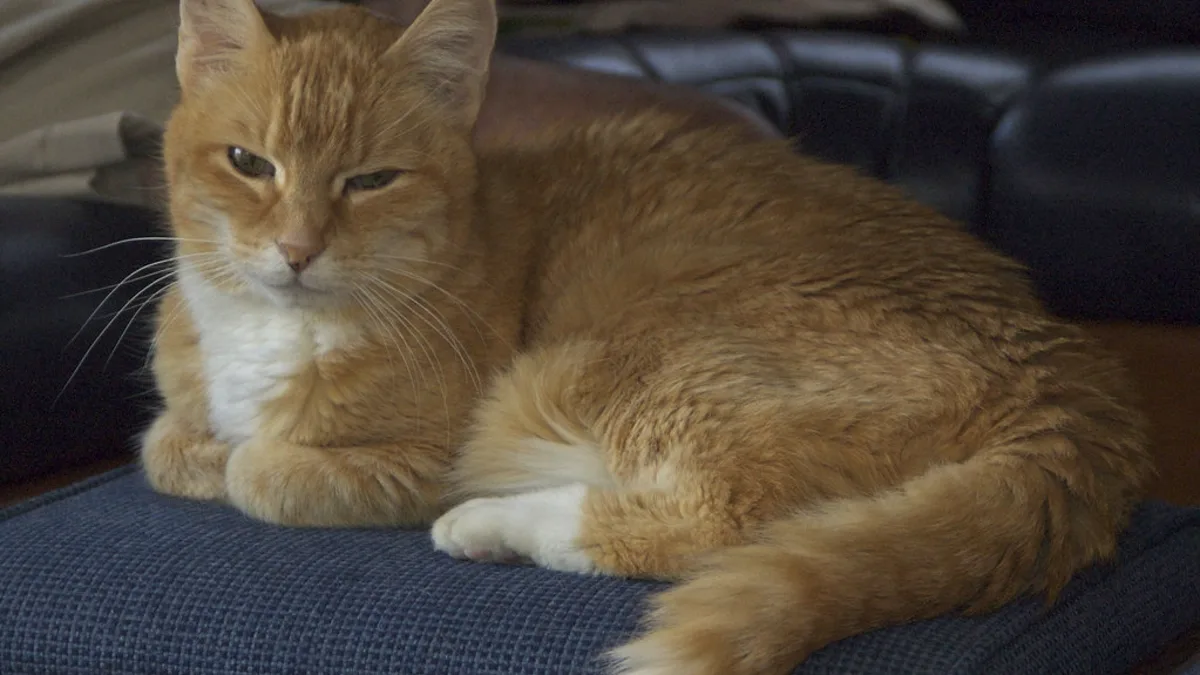
A neutral horizontal tail aligned with the spine indicates relaxed patrol mode. As the cat explores the hallway or checks food dishes, the tail sways gently without rigid tension. Pairing tail observation with your environmental layout, like elevating perches through a window perch for cats, supports confident body language and enriches broader cat behavior understanding.
Senior cats experiencing degenerative joint pain or arthritis may hold their tails noticeably lower when walking on hard slick flooring. If you notice a persistently drooped tail posture accompanied by hesitance to jump, consult your veterinarian for an orthopedic evaluation.
Comparison of Feline Tail Positions, Speeds, and Emotional States
Tail movements must be interpreted alongside ear posture, whisker spread, and pupil dilation. Because a single tail flick can indicate playful concentration or early annoyance depending on the environmental setting, observing overall feline posture prevents misinterpretations. Use this comprehensive reference table to identify what your cat tail is expressing in real time:
| Tail Position & Motion | Primary Emotional State | Accompanying Physical Cues | Recommended Handler Action |
|---|---|---|---|
| Vertical with Hooked Tip | Friendly and Inquiring | Forward ears, soft blink eyes | Offer gentle chin scratches or greeting vocalizations. |
| Slow Lazy Side Sweep | Mellow Contemplation | Relaxed shoulders, normal pupils | Allow uninterrupted resting or quiet companionship. |
| Rigid Floor Thumping | Irritation / Overstimulation | Flattened ears, twitching back skin | Immediately pause petting and give the cat physical space. |
| Puffed Bottle-Brush Tail | Defensive Fear / Shock | Arched back, piloerection, wide eyes | Eliminate the frightening stimulus and avoid cornering. |
| Tucked Under Belly | Extreme Fear or Pain | Crouched low body, flattened whiskers | Provide secure enclosed hideouts and assess for veterinary illness. |
| Quivering Tail Base | Intense Excitement / Greeting | Purring, head bunting against legs | Engage in affectionate talking or meal distribution. |
Source: International Society of Feline Medicine (ISFM) Feline Behavioral Signs Guide (reviewed October 2026).
How Do You Differentiate a Playful Twitch from an Agitated Lash?
Differentiating playful twitches from irritated lashes requires assessing the rhythm, origin, and muscular intensity of the movement. A playful twitch involves only the final two or three inches of the tail tip, vibrating delicately as the cat stalks an interactive lure.
An agitated lash originates from the base of the spine, swinging the entire tail shaft from side to side in heavy, deliberate strokes. This whip-like motion indicates a cat that has reached their threshold of sensory tolerance, often seen during prolonged grooming or excessive belly petting.
When you observe a swishing tail during interactive play with a cat wand toy, the motion reflects predatory excitement rather than anger. The cat channels surging adrenaline into tracking movement, preparing the rear legs for an explosive sprint across carpet.
If an agitated tail lash occurs while the cat is resting peacefully on your lap, take it as an early warning signal. The feline central nervous system becomes easily overstimulated by repetitive stroking; stopping immediately allows the cat to relax without needing to bite or scratch.
Five Steps to Respond Appropriately to Cat Tail Language
Responding appropriately to cat tail language prevents defensive scratching and establishes deep communication clarity between felines and their human caregivers. Domestic cats continuously monitor human reactions to determine whether their boundaries are being respected.
When handlers misinterpret tail twitches as playfulness rather than boundary warnings, cats often escalate to vocal hissing or sudden defensive swats. Developing a consistent habit of checking tail carriage before initiating physical contact ensures positive interactions and strengthens mutual security.
- Pause and Observe Carriage: Before extending your hand to pet, scan the tail carriage height and assess whether the posture is upright or clamped low.
- Check Tip Vibration: Notice if the tail tip is vibrating softly in greeting or flicking sharply with erratic muscular tension.
- Respect Floor Thumping: If the tail begins thumping against furniture or rugs, immediately withdraw your hands and permit the cat to step away.
- Allow Head Bunting First: Wait for an upright tail coupled with a forward head butt before offering long strokes down the back.
- Provide Retreat Options: Ensure the feline has an unblocked pathway to high perches or quiet bedrooms whenever tail cues indicate rising arousal.
How Do Multi-Cat Households Use Tail Signals to Negotiate Hierarchy?
In multi-cat households, tail signals function as silent peace treaties that prevent physical territorial conflict. Dominant or confident resident cats maintain high vertical tails as they stroll through common hallways, reassuring subordinate cats that their passage is peaceful and predictable.
Subordinate cats often approach dominant group members with lowered tails, executing soft head rubs against the dominant cat cheek or neck. This deference defuses tension and facilitates harmonious cohabitation around shared food bowls, litter areas, and resting perches.
When two cats confront each other with rigid, swishing tails held stiffly outward at a forty-five-degree angle, territorial friction is escalating rapidly. Handlers should intervene non-physically by stepping between their sight lines or creating a soft distractive sound before vocal hissing starts.
Providing multiple elevated perches throughout narrow hallways allows cats to bypass one another without direct confrontations, keeping tail postures relaxed and vertical across the entire indoor territory. Observing these daily exchanges gives caregivers deep insight into the invisible social architecture operating within their feline family, fostering an atmosphere where every pet feels protected, respected, and completely at ease in their everyday environment.
Frequently Asked Questions
Why does my cat tail quiver when they see me in the morning?
A quivering vertical tail base accompanied by purring indicates extreme social joy and affectionate recognition. It is a genuine compliment showing your cat feels secure and delighted by your presence.
Can a cat communicate effectively if they have a docked or tailless breed trait?
Tailless breeds like Manx cats compensate for lack of tail communication by using exaggerated ear angles, pupil size shifts, vocal chirps, and back arching to express their emotions clearly.
What does it mean when a cat wraps their tail around your arm or ankle?
Tail wrapping is an affectionate feline greeting known as allorubbing. It blends scents and expresses bonded companionship, functioning much like a gentle feline hug.
Why does my cat thump their tail while purring on my lap?
This mixed signal indicates conflicting emotions known as petting-induced overstimulation. While the cat appreciates your warmth, continuous touch is overwhelming their sensory nerves; pause stroking immediately.
Is a puffed tail always a sign of anger or aggression?
No. Young cats and kittens often puff their tails during playful zoomies when pretending to fight invisible prey. Context clarifies whether puffed fur stems from fun play or genuine fear.
How we researched this: Feline behavior metrics align with published veterinary ethology standards and clinical animal welfare guidelines. An AI tool drafted the rough structure, and the writer verified every claim and practical observation.