
Whisker summary An effective cat wand toy play routine mirrors a complete predatory sequence: stalking, chasing, pouncing, and capturing prey across ten to fifteen minutes. Waving lures in erratic bursts that imitate injured rodents or fluttering songbirds stimulates feline hunting circuits, while ending with a tactile reward prevents behavioral frustration.
Domestic felines retain ninety percent of their ancestral hunting repertoire. In the wild, solitary predators stalk small rodents through dense vegetation, waiting patiently for opportune moments to strike. Indoor confinement frequently dampens these natural impulses, leading to boredom, weight gain, and night-time agitation. Introducing an interactive wand toy transforms passive domestic cats into engaged, mentally satisfied predators.
Many cat parents make the mistake of dangling a wand directly into their cat’s face or swiping it aggressively against their whiskers. Natural prey never charges straight toward a predator. Mice and insects scurry away, duck behind chair legs, and freeze when spotted. Recreating these authentic evasive maneuvers triggers deep predatory interest that static plush toys cannot match.
- Predatory Sequence Completion: Always structure play sessions to include stalking, chasing, catching, and immediate post-play feeding.
- Movement Dynamics: Move the wand lure away from your cat and behind obstacles rather than waving it directly in front of their eyes.
- Session Duration: Limit play sessions to ten or fifteen minutes twice daily to avoid joint exhaustion in senior cats.
- Tactile Catch Rewards: Allow your cat to capture the lure firmly between paws at least four times per session to build hunting confidence.
- Post-Play Storage Safety: Always store string wands securely in a closed closet or drawer after play to prevent dangerous string ingestion.
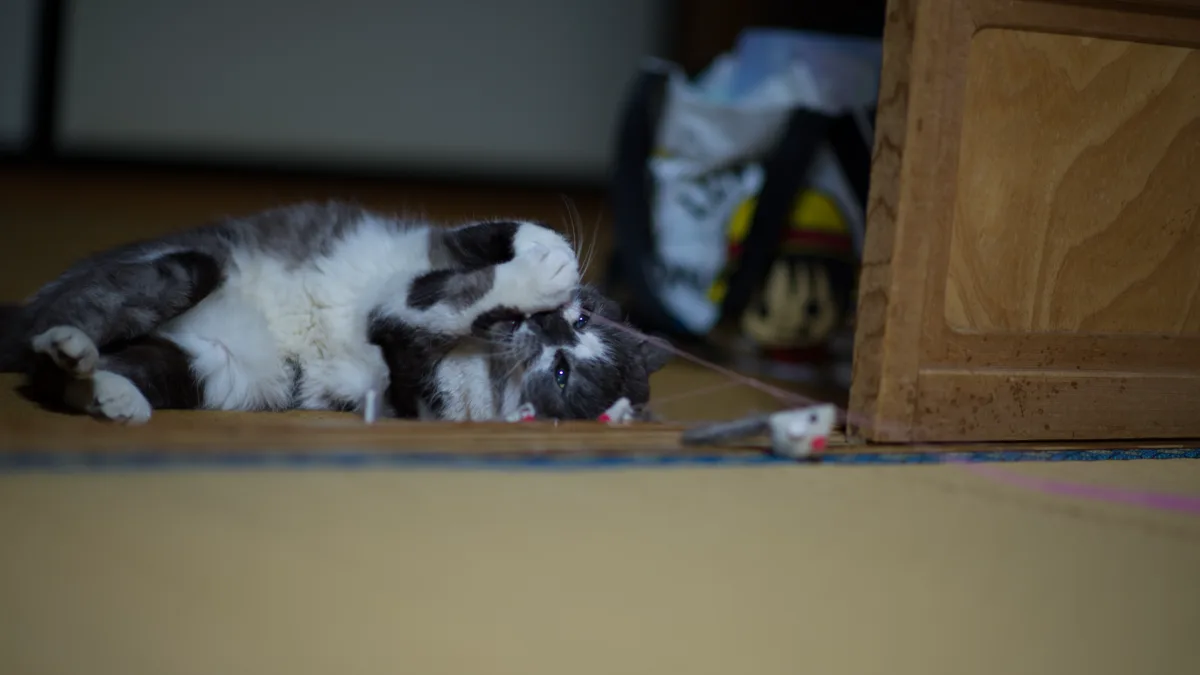
How to Mimic Natural Prey Motion with a Cat Wand Toy?
Mimicking natural prey motion requires varying speed, direction, and rhythm to match the behavior of mice, birds, or insects. Begin by dragging a fleece ribbon lure slowly across a carpet, stopping periodically behind an armchair to simulate a mouse pausing between sheltering spots.
For feather attachments, execute subtle fluttering twitches followed by sweeping parabolic arcs through the air. Keep flight paths low to the ground where cats can track trajectories without crashing awkwardly into coffee tables. Felines track horizontal motion with exquisite sensory precision, so sudden stillness often triggers the pupils to dilate immediately prior to an explosive pounce.
Avoid frantic continuous swinging that never slows down. In nature, prey moves in bursts separated by tense stillness. Pausing the lure behind a cardboard box or under a low blanket allows your cat to enter full stalking mode, tensing shoulder muscles and calculating jump distances carefully. Pairing ground play with vertical platforms like a sturdy window perch for cats expands movement throughout your living space, building upon fundamental cat enrichment ideas and active play and enrichment routines.
Comparison of Wand Lure Types and Target Prey Styles
Different cats exhibit distinct hunting preferences based on individual temperament and breed traits. Matching the right lure attachment to your cat’s specific predatory style maximizes play enthusiasm:
| Wand Lure Type | Simulated Natural Prey | Ideal Feline Temperament | Recommended Play Technique |
|---|---|---|---|
| Guinea Fowl Feather Cluster | Ground birds and fledglings | Agile jumpers and active kittens | Low sweeping swoops with gentle fluttering landings. |
| Fleece Ribbon Tail | Snakes, lizards, and small mice | Senior cats and cautious stalkers | Smooth floor dragging with pauses behind sofa cushions. |
| Deer Hair or Sisal Bug | Beetles, moths, and crickets | Detail-oriented paw patters | Short erratic skittering hops across textured area rugs. |
| Plush Mouse with Rattle | Field rodents and voles | Heavy biters and kick-pouncers | Slow rustling beneath newsprint paper or cardboard tunnels. |
Source: American Association of Feline Practitioners (AAFP) Environmental Enrichment Protocol (checked October 2026).
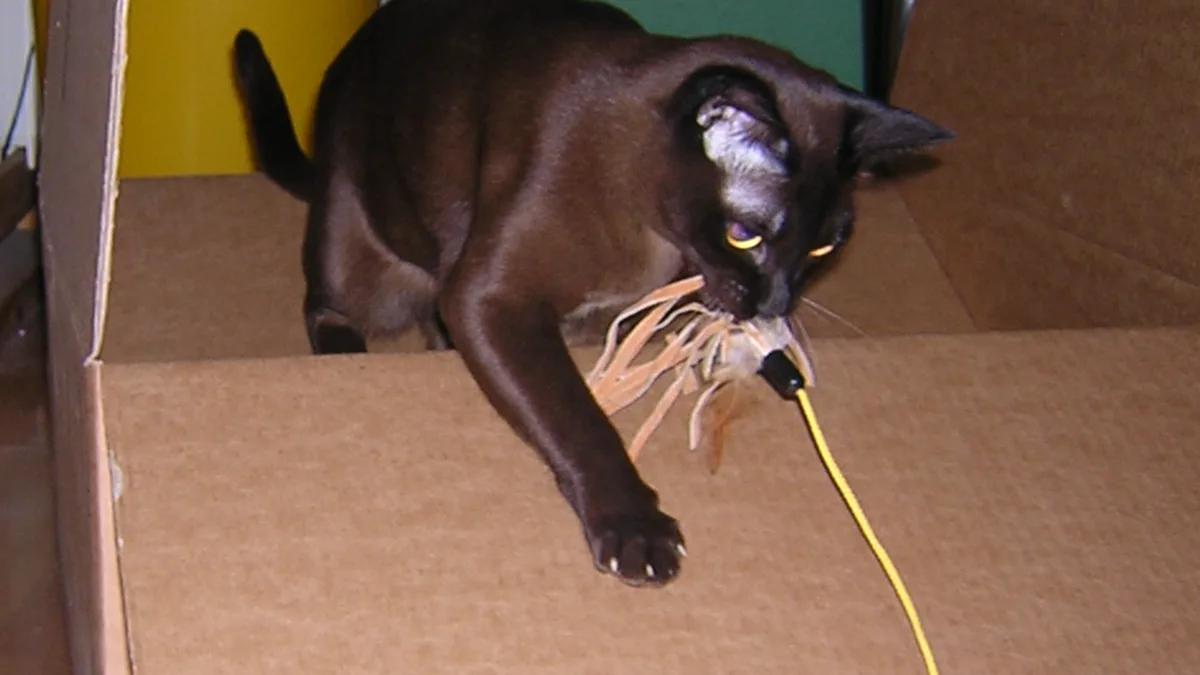
What Are the Five Stages of a Complete Feline Play Routine?
Structuring play around a five-stage hunting cycle ensures both mental engagement and physical satisfaction. Follow this sequential routine during each interactive daily session:
- The Visual Cue (Stage One): Rustle the lure softly out of direct sight, scratching it against a floorboard or cardboard flap to engage hearing and focus attention.
- The Patient Stalk (Stage Two): Draw the lure slowly away, allowing your cat to drop into a crouched posture with tucked paws and vibrating tail tip.
- The Kinetic Chase (Stage Three): Accelerate movement across open floor space, letting your cat sprint, dodge, and leap over soft obstacles.
- The Decisive Capture (Stage Four): Slow the lure to a halt, allowing the cat to strike firmly, sink claws into the fabric, and deliver rewarding bunny kicks.
- The Meal Reward (Stage Five): Provide a spoonful of wet food or a high-protein treat immediately after retiring the toy to complete the hunt-eat-groom-sleep cycle.
Why Must Indoor Cats Catch the Lure During Play Sessions?
Allowing cats to catch the lure prevents neurological frustration and redirect aggression. When cats chase untouchable red dots from laser pointers or out-of-reach toys without tactile feedback, adrenaline builds up without an emotional release valve, occasionally leading to ankle nipping or inter-cat tension.
Giving your cat the tactile satisfaction of holding, biting, and bunny-kicking a physical lure releases beneficial neurotransmitters that calm the nervous system. Handlers should let the cat win the hunt multiple times during a fifteen-minute bout. Loosen tension on the wand rod so the cat feels the weight of the captured quarry beneath their paws.
After a triumphant capture, cats often groom their facial whiskers and settle into a contented posture. Following the session with a nutritious meal cements this natural biological loop, ensuring the indoor cat transitions smoothly into restful slumber rather than restless pacing. In multi-cat households, ensuring each individual feline receives dedicated capture moments prevents dominant personalities from hoarding the play space.
Younger cats and high-energy breeds such as Bengals or Abyssinians may require slightly longer chase sequences before accepting the final capture. Watch for subtle physiological signs of satisfaction, such as relaxed ears, slowed respiration, and an unhurried stretch across the rug. When these calming cues appear, provide the final high-value food reward and quietly retire the wand. Consistent daily play builds deep companionship and ensures your home remains a peaceful sanctuary for every pet.
What Are the Critical Storage and String Safety Rules?
String safety is paramount when incorporating wand toys into your home. Elastic cords, synthetic strings, and wire attachments pose severe gastrointestinal obstruction hazards if swallowed by unattended cats.
Never leave string wands lying on living room floors, sofas, or scratching posts when you leave the room. Felines possess backward-facing barbs on their tongues called papillae, which make it almost impossible to spit out fibrous materials once chewing begins. Ingested linear foreign bodies can cause dangerous intestinal bunching requiring emergency abdominal surgery.
Designate a secure storage location such as a lidded plastic bin, high closet shelf, or locked cabinet drawer. Inspect cords before each play session for fraying, loose plastic beads, or detached feathers, replacing worn attachments immediately to maintain pristine safety.
Questions from Cat Handlers
How often should I play with my cat using a wand toy?
Aim for two dedicated play sessions daily, lasting ten to fifteen minutes each. Morning sessions before breakfast and evening sessions before dinner match natural crepuscular hunting peaks and help cats sleep peacefully throughout the night.
What should I do if my cat loses interest in the wand after two minutes?
Try switching lure attachments or altering movement speed. Many cats get bored when the lure is waved erratically in the air; try crawling it slowly beneath a paper towel or behind a sofa cushion to spark curiosity.
Are wire wands safer than string wands for aggressive chewers?
Piano-wire style wands provide unpredictable fluttering motion and cannot be easily chewed through like fabric strings. However, handlers must still supervise wire wands closely to avoid accidental eye pokes or bent steel kinks.
Can senior cats with arthritis still enjoy wand play?
Yes. Keep the lure low to the ground and limit rapid direction changes. Senior felines benefit enormously from gentle tracking and slow paw swatting, which maintains cognitive alertness without straining stiff hip joints.
Why does my cat pant with an open mouth after vigorous wand chasing?
Occasional brief panting after intense sprinting indicates heavy exertion, but cats cool themselves primarily through grooming and foot pads. If open-mouth breathing persists for more than two minutes, cease play immediately, cool the room, and consult your veterinarian if episodes recur.
How we researched this: Routine recommendations reflect published behavioral enrichment guidelines from veterinary associations and feline ethologists. An AI tool structured the draft, and the editor revised every exercise and safety precaution.